- Self-Service Portal · Web + Mobile
- Wataniya Insurance · Jeddah
- 2023 – Present
- OutSystems · eBao · iOS · Android
Wataniya
Turning a call-centre bottleneck into a 24/7 self-service platform — the first customer-facing digital platform in Wataniya Insurance’s history.
- Staff needed for routine policy changes
- 0
- Customer access, no business-hours dependency
- 24/7
- Live apps: iOS + Android
- 2
The problem
Buried in work customers could do themselves
Every add-on, driver change or cancellation needed a phone call — and two departments to process it.
The solution
A portal customers run themselves
Log in, pick an action, confirm. No call, no wait, no staff involved.
The result
Wataniya’s first digital platform
Live on the web, the App Store and Google Play — available 24/7.
Two departments were buried in work that customers could do themselves
Wataniya Insurance customers had no way to manage their own policies online. Every add-on request — adding a driver to a car insurance policy, extending geographic coverage, requesting a cancellation — required a phone call or a visit.
This created a compounding problem on two fronts simultaneously: the call centre was handling a relentless volume of routine requests that required no specialist knowledge, and the operations department was manually processing the same requests in their back-end systems, one by one, every single day.
The core tension
"Customers were waiting on hold for tasks they should be able to do in two minutes. Staff were spending their days on data entry instead of actual customer service. Neither side was getting value from the interaction."
Consumed by inbound calls and support tickets for routine policy modifications. High call volume, long wait times, and low-value interactions crowding out complex cases that actually needed human attention.
Manually executing hundreds of policy changes per day in back-end systems — repetitive, error-prone, and time-consuming work that could not scale with the company’s growth.
Understanding the problem before designing the solution
Before opening a single design tool, I ran structured research sessions with each affected department. The goal was to map the full picture — not just the surface complaints, but the underlying reasons these problems existed and what a realistic technical solution might look like.
- 01Call centre research sessions
Sat with the customer care team to document the most frequent request types, average handling times, and the exact manual steps involved. Identified that driver additions and geographic coverage changes made up the majority of call volume.
- 02Operations department mapping
Walked through the back-office workflow step by step with the operations team. Documented each manual touchpoint in the policy modification process — this became the blueprint for what the system needed to automate.
- 03Technical discovery with the dev team
Worked with the development team to understand why the self-service capability didn’t already exist — whether it was a data access issue, a platform limitation, or a policy constraint. This shaped which features were achievable in the first release.
- 04Wireframes and user flow design
Translated the research into a customer-facing user flow — login, policy overview, action selection, confirmation — then built interactive prototypes for stakeholder review before moving into OutSystems development.
A self-service portal that puts customers in control of their own policies
The solution was to build a dedicated self-service portal where customers could log in with their existing Wataniya account and perform policy modifications themselves — without calling, without waiting, and without involving any member of staff.
I designed and developed the portal end-to-end on OutSystems, integrating with the eBao insurance platform for policy data. The portal was simultaneously delivered as a web application and as a native mobile app for both iOS App Store and Google Play.
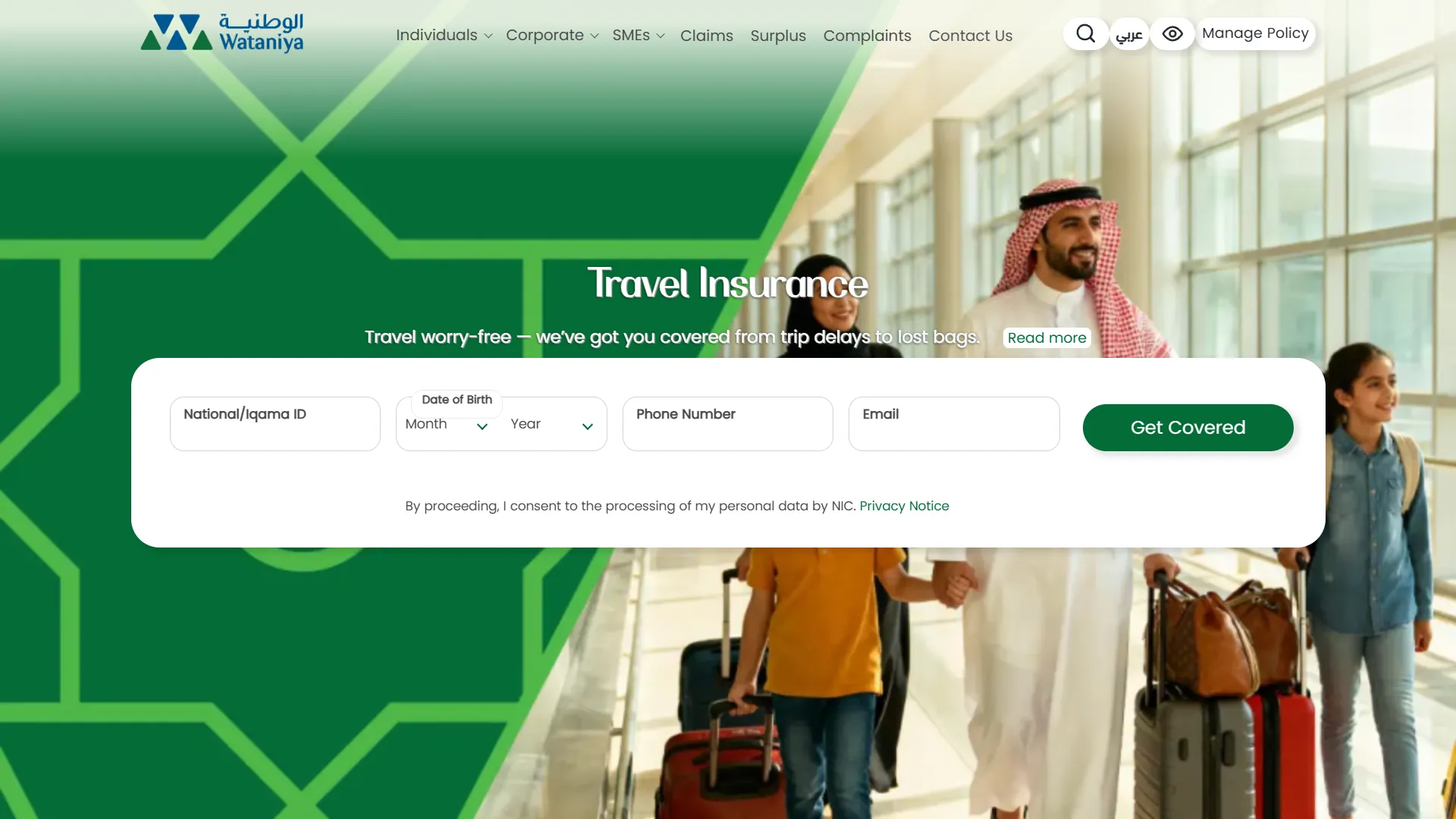
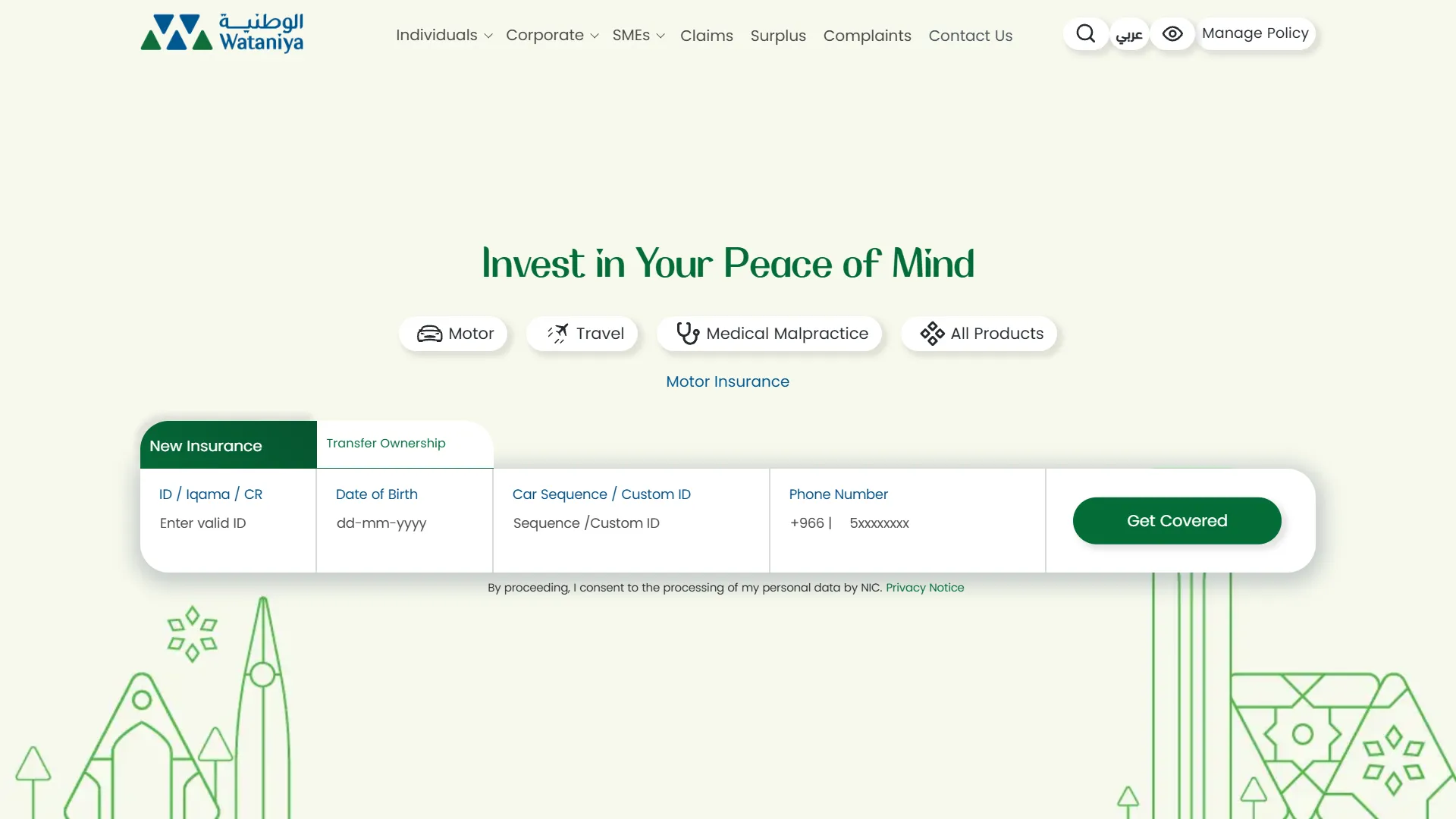
Buy
Start a quote in four fields
Product tabs and a single quote form on the home page: ID, date of birth, car sequence and phone number.
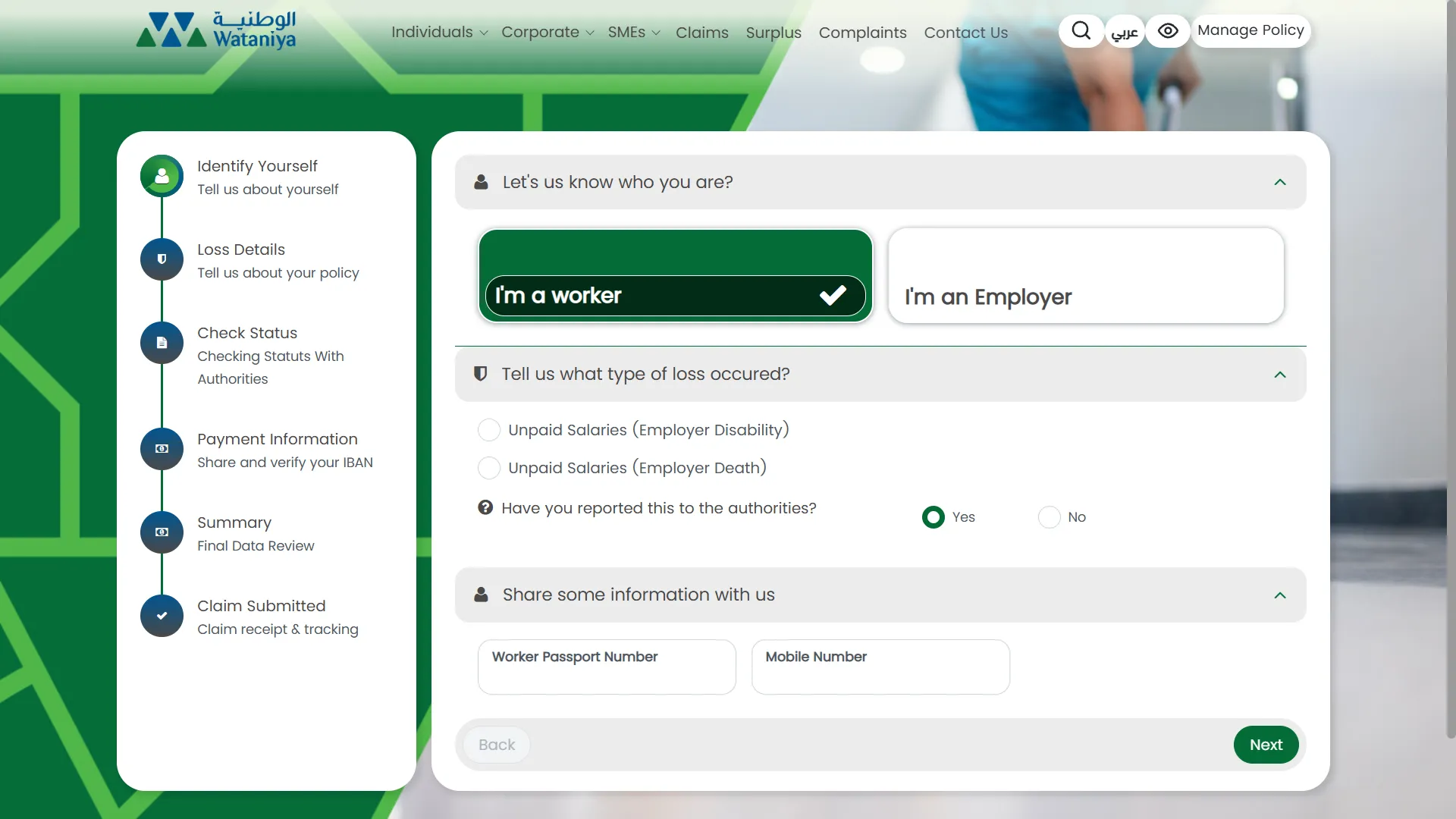
Claim
Claims as a guided, stepped flow
A progress list on the left and collapsible sections on the right keep a long claim form manageable.
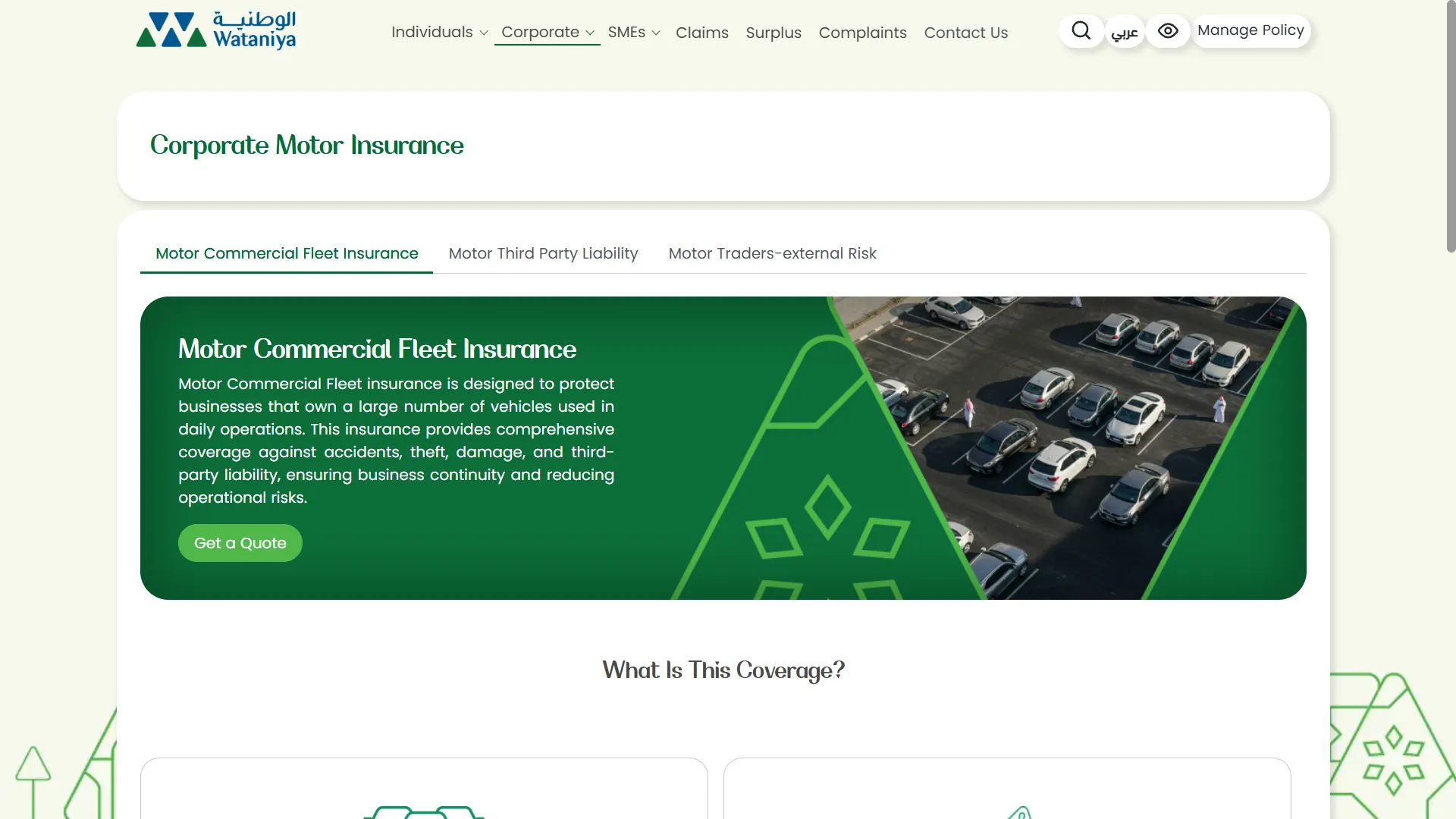
Arabic · RTL
Fully right-to-left in Arabic
The whole experience mirrors for Arabic: navigation, cards and forms, not just the text.
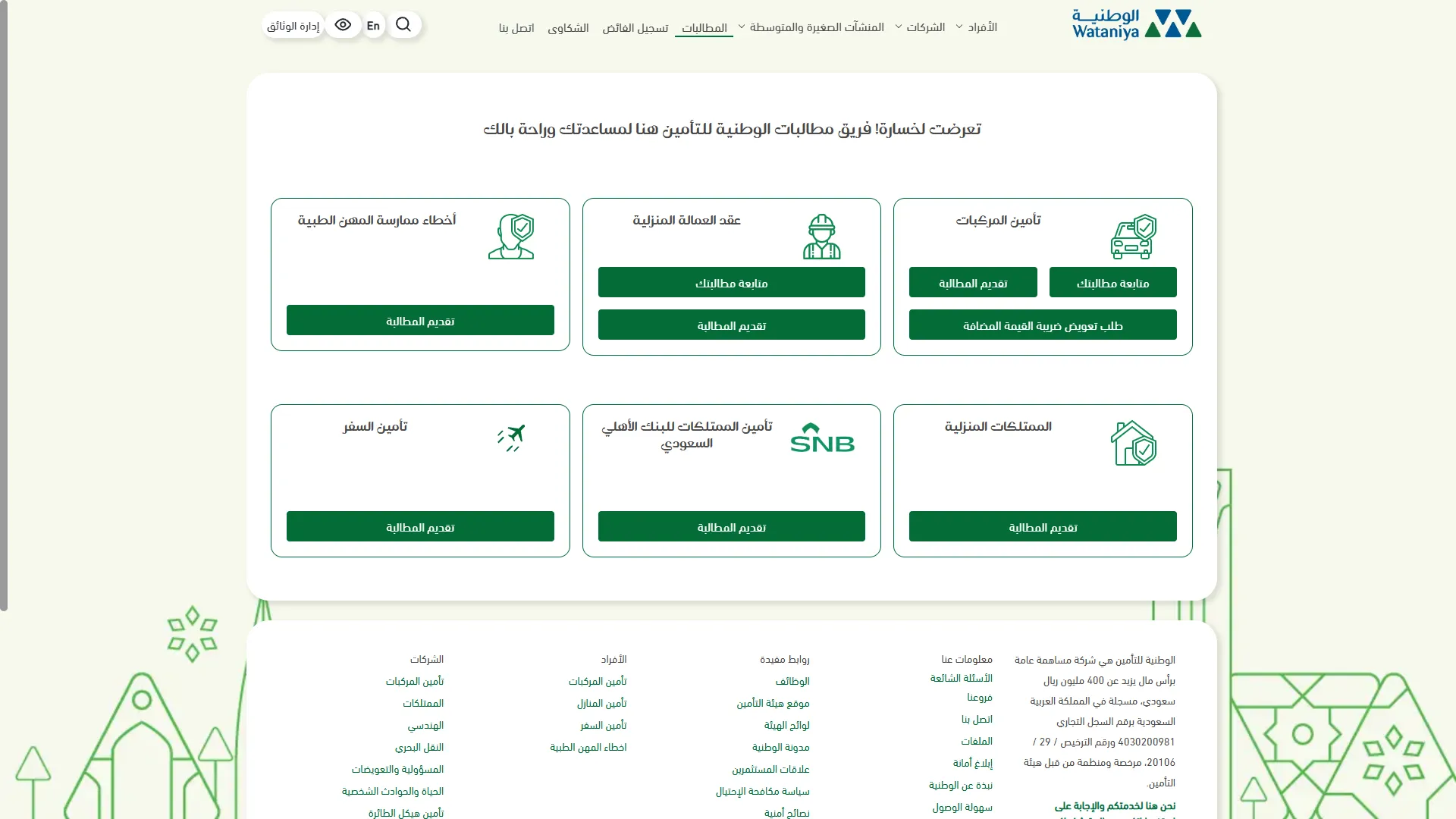
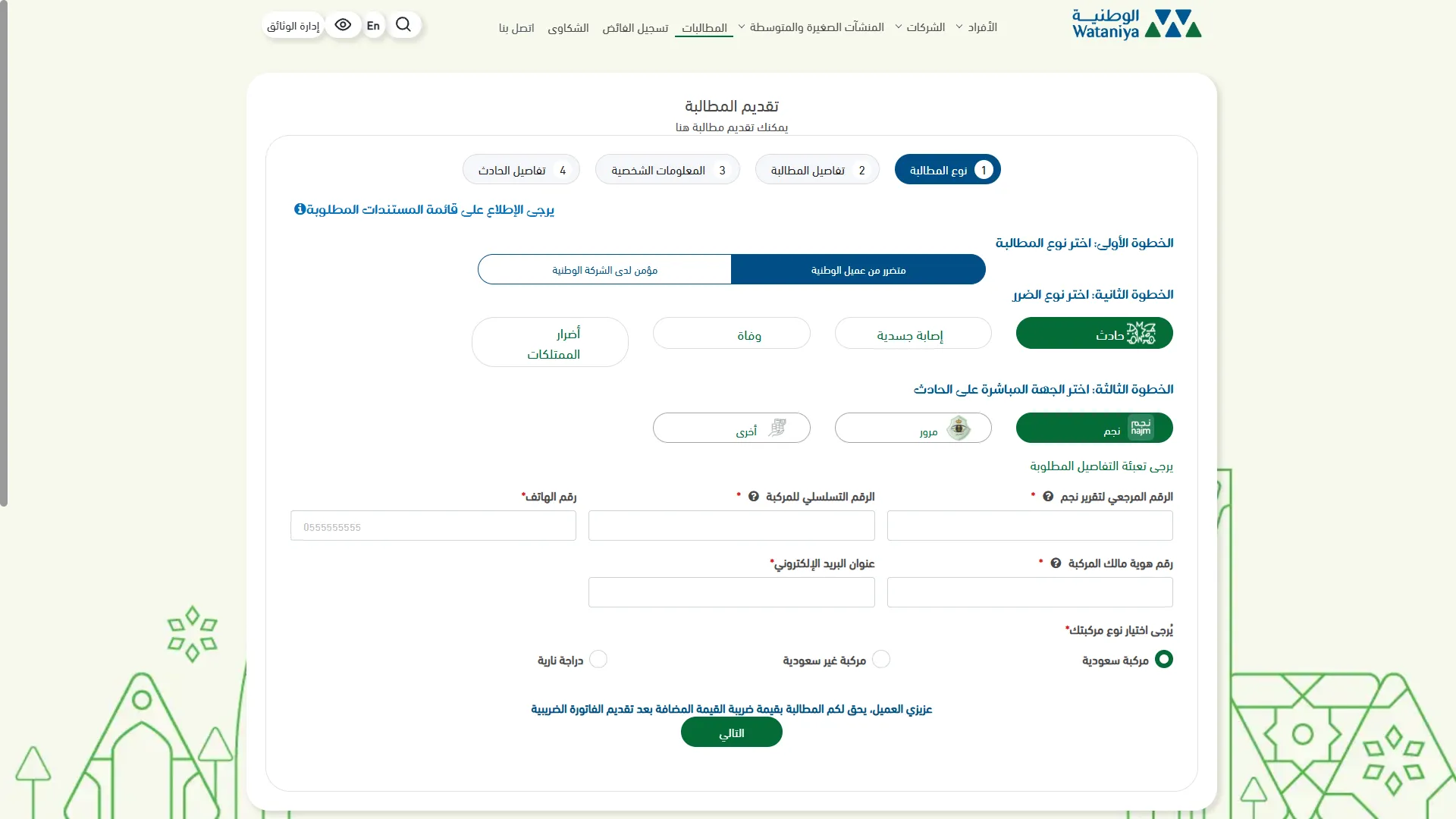
- Policy dashboard — a clear, scannable overview of the customer’s active policies, renewal dates, and available actions, designed to require no insurance knowledge to navigate.
- Driver management — customers can add or remove named drivers from car insurance policies independently, with instant confirmation and no manual processing required.
- Geographic coverage add-ons — extending coverage to additional regions or countries, previously a call centre task, available as a self-service flow with clear pricing shown before confirmation.
- Policy cancellation flow — a structured, step-by-step cancellation process that gives customers clarity while giving the operations team a consistent, auditable record of every request.
- SVG animations and micro-interactions — custom-built motion design to guide users through multi-step flows and provide immediate visual feedback at each confirmation point.
- OutSystems
- eBao
- HTML5 / CSS3
- JavaScript
- Node JS
- Cordova
- Framework 7
- SVG Animation
- Adobe Creative Cloud
- iOS App Store
- Google Play
Customers handle their own policies. Staff focus on what matters.
The Self-Service Portal became the first customer-facing digital platform in Wataniya Insurance’s history. Customers can now log in and modify their policies independently — at any time, from any device — without needing to contact the company at all for routine changes.
What changed
"The portal didn’t just digitise a process — it redistributed how two departments spend their working day. The call centre isn’t a bottleneck anymore. Operations isn’t a data entry team anymore. That’s the outcome I’m proudest of."
The customer care team now operates in an oversight and excellence role — monitoring activity, resolving edge cases, and focusing on the complex customer situations that genuinely need a human. The operations team shifted from manual data entry to quality control. Both departments gained time back for work of higher value.
- Staff needed for routine policy changes
- 0
- Customer access, no business hours dependency
- 24/7
- Live apps shipped: iOS + Android
- 2
What I learned
Key learning
This was my first project in the insurance industry, and the biggest lesson was understanding how regulatory and compliance requirements shape UX constraints in ways that aren’t immediately obvious. Decisions that seemed like unnecessary friction in early design reviews — confirmation screens, re-authentication steps, explicit disclosure text — were driven by insurance regulation and eBao platform requirements rather than design preference.
Learning to design within those constraints rather than against them, and to communicate their rationale to stakeholders clearly, made both the product and the review process considerably smoother in later sprints.
Next case study
ANB Mobile Banking App
A year of development, a finished app and a UX so confusing the bank considered scrapping it. Redesigned, shipped into a pandemic, and awarded five times.
View project →